


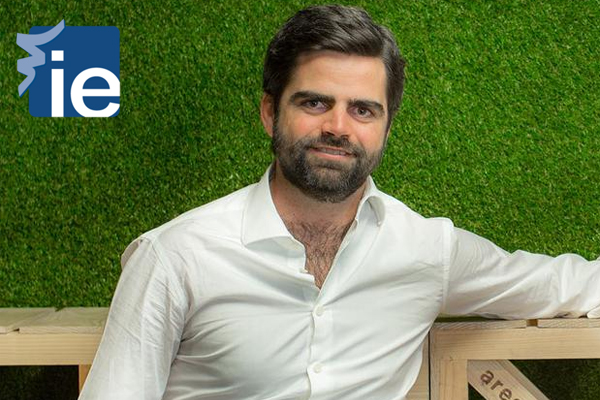
The 1st of JulyDiego del Alcázar Benjumea, Vice Chairman of IE Business School, visited Moscow. He told MBA Strategy about his secrets of successful management, his projects and his own experience of studying at business school.
Is this your first time in Moscow?
Yes, it’s my first time in Moscow and Russia in general.
What brought you here, promising startups or promising students?
I’m always looking for promising students, but you know, I’ve been very much involved with startups, creating a startup environment in Spain. In the beginning, I launched Move On where we brought together 25 to 30 successful Spanish entrepreneurs who had a great deal of experience. From there we started – I don’t know if you know this – the South Summit.
It’s a big startup event. It was originally called Startup Spain or Spain Startup. Basically, this even was born thanks to the people from Move On.
I am one of the cofounders of the South Summit and I’m also on the board of directors. It has been a huge success in Spain and Latin America. We’ve been organizing startup conferences for three years now with projects from many different countries coming in. It is definitely a big success. I work with startups in other areas as well. After I got my MBA, I created a company which searches for business opportunities in different sectors. Our primary focus was energy efficiency. We’ve found a company that specializes in lighting efficiency, we invested in the majority stakes, and we manage their operations. So I did that for two years. Later, I believe it was a year ago, I moved on to IE. Now we are actively searching for students.
You are good at searching so why not?
Yes, absolutely. As you can see from my background, searching for startups and searching for students has been my mission. Although, when I travel I search mostly for talent.
You juggle so many things: there’s your job at IE, the South Summit, and the Step Up Capital. How do you do that? How do find time for all of these?
Right now, I’m fully committed to IE. It’s my 24-hours-a-day job. We’ve reached a very interesting point in our development, so I dedicate all my efforts to IE. It’s true that I founded Step Up Capital, but my partner is basically running it at the moment. He’s very talented and I can really rely on him. Of course, I’m on the advisory board and I’m also Vice Chairman of the company we had started together, but I really can’t spend much time running it. IE is my full-time project now.
I see. You took a step back so you could concentrate on IE.
I did take a step back, but I’m still helping with the institutional relationship and I’m also envisioning our strategy. The present Chairman at SSIE, which is a lighting efficiency company, was previously Chairman of IBM in Spain and CEO of the international business Iberdrola, a leading electricity company in Spain. So while I develop the overall strategy and manage the institutional relations, my partner does the hard day-to-day work.
I see, that’s pretty interesting. Since we’re talking about MBA and IE being your 24-hour occupation right now, could you tell me what part MBA played in your career? Before you founded Step Up Capital, you received your MBA degree. How did it influence your professional development?
Well, I started my career as a consultant for Bain & Company. I must say I have always been very entrepreneurial. I have this entrepreneurial mindset, but I think Bain was very open to people with such profiles. I told them this was going to be an amazing school for me, and it really was. During the two years I spent with them, I really learned a lot. Working for Bain & Company taught me to structure my thinking. An entrepreneur is a kind of impulsive person. If you have an entrepreneurial mindset, you have to really structure yourself, you need to learn how to use tools, how to understand business from a different perspective, and how to challenge your decisions you would have otherwise made very quickly. In that sense, Bain & Company was a great school for me. Later I thought studying at a business school would be a great way to continue my education.
I chose INSEAD for several reasons. This school offered some of the things we offer at IE, and I also have a great relationship with IE, but since I’m Spanish I wanted to study abroad in order to fully immerse myself in the MBA environment. Moreover, I thought two years was too much. MBA is not just an academic program, it goes beyond that. At a business school, you get to meet lots of different people with different backgrounds. Students come from all over the world. After a super intense year of studying, you become very close friends. It’s like a big family. Even having a drink with people can have a huge impact.
For example, I now have a close friend in Japan. I visit him often. I’ve been there about ten or six months ago. He introduced me to his wife and some other people I found very interesting. And it’s thanks to MBA that I have a friend in Japan. I think, in terms of creating opportunities for networking and building an international environment INSEAD and IE are doing very important work. This year, we’ve broken our own record for the number of international students studying at IE. We have 106 nationalities on campus in Madrid and no more than 10% of one nationality present. IE has become something like the UN in that sense.
Amazing diversity.
Yes. When choosing the best MBA program, I find three factors to be of extreme importance. Firstly, it has to be a one-year program. Diversity is very important as well as academic excellence.
While you’re studying at a business school?
While you’re at school, yes. When I decided to pursue my MBA degree, I wanted to focus on soft skills rather than technical subjects. I was interested in organizational behavior and all things involving psychology. It is very useful not only from a professional perspective, but also on a personal level. Finding a balance between work and personal life, I think, is very important in the world we live in today.

To sum it up, would you say that MBA really boosted your career and your personal development?
Absolutely. After I got my MBA, we launched Step Up Capital. Actually, I launched Step Up Capital while still at business school.
You did it while you were studying? Was MBA the reason you did it? Did they encourage you? Did the program help you realize you can do it?
As I said I chose the program for several reasons. For one thing, I think Bain & Company really pushed me to do an MBA. My entrepreneurial spirit spurred me on, and when I founded Step Up Capital, I needed a solid background for the investors I was going to approach. I think that was an important decision. Besides, I have a close relationship with IE. My father is actually the founder of IE. It’s like a family business: if your father is a shoemaker, you really know a lot about shoes. I was born into this environment and I know it very well, but I wanted to have my own experience. I didn’t want anyone telling me what to do or which MBA program to choose. I really wanted to make my own decisions and I’m very thankful that I could do it my way, which is very important. Now, my experience is also very important for IE. Getting to know a different environment, travelling to various places and meeting interesting people is very enriching. As you know, at our school we share our experience with our peers, so it’s also very enriching for our institution.
I agree with you.
While in fact, INSEAD is our direct competitor.
Yeah, it’s very ironic, but then life is ironic and that’s the beauty of it.
Absolutely.
You know, there is an opinion that one should either get an MBA or launch a startup or maybe continue with their career and the work that he or she is doing. You did both. What is best? I understand that you did both, but there is this opinion. What do you think about it?
I don’t think you necessarily choose one over the other. Actually, sometimes you don’t know what decision to make, and business school is a great place for you to try and find your way. Some people decide to pursue an MBA after five, six or seven years of hard work at a big corporation or maybe trying to start up their company, and they don’t reach the level they want. For them, doing an MBA is a way to reinvent themselves. If you’re not sure what you should do next, business school is a great place for you to start looking. You need to step aside, take a breath, look at where you are now and finally make a decision. You enter a unique environment where people with all the various backgrounds are going to be your colleagues, your friends; they are going to share the experience with you. During the program, you might realize you want to launch a startup, and MBA is a great platform for that, or you might realize that startup work is not for you. At a business school, you are going to get in touch with some of the best companies in many different sectors. Say, you’re from Russia and you have some experience working here, but then, when you do your MBA, you might decide you want to work in Spain, or France, or China, or Japan. MBA is a platform that allows you to do that.
To transfer and to change.
Yes, to transfer and to change. I don’t think you need to choose between your current career, a startup or an MBA. Maybe I shouldn’t promote MBA that much as I’m working for a business school, but my own experience tells me that MBA offers a much clearer view of one’s path. It helped me decide which course to take from a professional and personal point of view. When you’re doing your MBA, it’s a great time to have a breather, to try to understand and get to know yourself better. Actually, there are plenty of courses to help you do just that. I think, understanding yourself is the most important thing.
How long ago did you graduate from your MBA program?
In 2010.
Do you think that MBA programs are changing, and if you do, how are they changing? How are they adapting to the changing world?
I believe, IE is very innovative. We are setting the trends in terms of how things change. Did you know that back in the 80s we were the first business school to focus on entrepreneurship? Now, 20 years later, everybody talks about entrepreneurship as something really important. We’re very proud to say we were there first. As I said, my father is the founder of IE, and he is an entrepreneur. That’s why I think IE is a very entrepreneurial school, because it was founded by an entrepreneur. You can see that entrepreneurial mindset all around the place. Now I see our peers stepping in, they are shifting towards more entrepreneurial-mindset programs, and they are also shortening their programs. At IE, we were pioneers in offering a one-year program along with INSEAD. Now, we are reinventing ourselves once more. Maybe you could say we are adapting. Still, we’ve just reinvented our international MBA program. We are going to offer more soft skills, which will be of great value to our students. We are also introducing more technology-based methods, which is also very important. We want a much more market-oriented international MBA. I think it will attract more foreign students.
Interesting. What do you think about online MBA? Is it possible to get as much as you can get from an offline MBA?
You know, this year, we are ranked No.1 by The Economist and The Financial Times for our online programs. And I must say this comes from a big failure of IE.
In the year 2000, we actively invested in online methodology or rather in blended methodology since we’re not focused exclusively on online, we like to have both teaching methods present. We took a risk, because online programs weren’t as big at the time as they are now, but we managed to train our professors to teach online. We had to wait for our investments to pay off. Our learning curve started 7 to 10 years ago, but we took that risk, and that’s why we are now leading the industry.
Do I believe in online MBA? Yes, I do. I’m talking here about Executive MBA, Global MBA, and Global Executive MBA. It’s the part-time MBA that benefits most from the online approach, and I’m very keen on that. The methods we’ve developed allow you to interact with people as if you were meeting them face-to-face. Say, you’re in Russia, but your peer is in Singapore, our other colleague is in Brazil, and your professor is in Madrid. You can interact with them very easily. So yeah, the online experience truly is amazing.
Still, I believe face-to-face interaction is indispensable. Seeing people, having a drink with your peers, taking your friends to dinner is also very important. At IE, we don’t just teach, we sell the complete experience. Part of that experience is that you get in touch with people, go see a company, meet your peers and really interact with them. Part-time MBA is all about that as well.
As for the full-time MBA, what I know from my own experience and the feedback we get from our students is that while the full-time MBA needs some online teaching methods, on the whole it has to be face-to-face. As I say, it’s like a big family. You stay there for one year with your peers from all around the world; you meet people from different backgrounds. You develop a special kind of professional and personal relationship. In that sense, I believe we can introduce – and we’re actually introducing – some online modules, but it’s just to get the flavor. We don’t want to interfere with the whole experience that we’ve developed for the full-time program.
So you believe that the importance of the firsthand communication will never let all of the MBA or Master’s programs be online.
Should all MBA programs be online? I’m not sure. I think it has to be a combination.
Now, let’s talk about those who choose to launch a startup over getting an MBA. Obviously, you know a lot about startups. What should people concentrate on? What are investors interested in these days?
You know, my experience is quite extensive. I don’t have a single sector I specialize in. You know why? It’s because as a businessman you first need to have good management skills. I have a very good team. We’ve been looking at various new technologies and new sectors investors may find interesting. Even those investors who have entrepreneurial experience do not necessarily know what’s going on in all the sectors. So we’ve been studying the sectors and offering them opportunities to invest. Basically, we focused on new technologies and especially energy efficiency. We really saw energy efficiency as an opportunity. Efficient lighting allows us to generate savings of over 50% compared to traditional lighting. We offer our services to big corporations that spend a lot on lighting, like hospitals, retailers, street lighting companies. We tell them: you don’t have to invest anything, instead we are going to generate 25% savings for you over the next 5 years. We give you a guarantee from an insurance company. The investment is going to be completely guaranteed. In fact, we were going to save 50% with 25% for the benefit of the company, and another 25% were used to pay ourselves for the investment that we had made. That was our business model. I think it has grown very quickly in Spain. The lighting efficiency sector offers many opportunities. For example, big data, which allows you to improve the efficiency of a building by measuring all the various parameters. Very soon, we are going to be able to generate energy from buildings. You will be able to buy an amount of energy, save a lot, and then sell the energy you’ve saved. That’s our new model for now. I think it’s going to be very interesting.
Sounds perfect. Tell me how it happened. You are not a lighting engineer or anything. You didn’t know a lot about light. So you needed first to find some people who are good at it. How did you come up with the idea of a light company?
It’s true I’m not an expert, but I’m used to various business models. At Bain & Company, I worked with very different businesses and had an opportunity to see how business models work in different industries and sectors. That’s why I have some expertise in watching business models and understanding them very quickly. While at business school, I got to see many case studies, many business models from various sectors. That’s how I got used to understanding business models very quickly.
At Step Up Capital, my partner and I together with a group of people spent 6 to 8 month studying different sectors we thought were interesting based on our previous experience. My partner used to work as an investment consultant for Goldman Sachs, and he did his MBA at IE Business School. So both of us had the background. We focused on energy efficiency and new technologies and a couple of more sectors. Very quickly, we saw an opportunity in energy efficiency and in two or three months, we became leading experts in energy efficiency sector. When you study the sector in depth, you will soon understand how things work. It’s true that I’m not tech-savvy as far as the industry is concerned, but at the same time I understand the underlying principles. Among our partners, 60% are entrepreneurs and business executives while 40% are technology specialists. I think it’s a good combination.
That’s a great combination. Do you think it’s important to be born with entrepreneurial skills or is it possible to learn to be an entrepreneur? What do you think?
I’m not sure if it’s something you learn or something you are born with. I think the environment is very important. My mother is an entrepreneur, so are my father and my sister. So yeah, there’s definitely something in my genes, but it’s not all there is to it. For me it was very easy, because I’ve been in an entrepreneurial environment since I was born. That entrepreneurial mindset is very important, because at IE we don’t teach you to be an entrepreneur, we teach you to have an entrepreneurial mindset. You see it in your corporation, your business, your startup, in your family business, wherever you are. That’s the important thing. There are people who have been as lucky as I am, they were born into an entrepreneurial environment, but they didn’t have an opportunity to explore it. At a business school like IE, you really get to see what the entrepreneurial mindset is. I think it’s very useful. It is there that you realize how to develop that entrepreneurial mindset. You can stay at your corporation and become CEO or Chairman, but there are many abilities that you might not be able to explore, because you didn’t step aside to venture into some other business environment.
I see. Could offer our readers a piece of advice? Apart from pursuing an MBA, while you’re still getting those 3 to 5 years of experience you need. What should a person do? How should they develop their skills?
I think business schools and especially IE are not always looking for applicants with a perfect profile. They are interested in candidates with different backgrounds: architects, physicists, mathematicians, etc. Once we even had a pianist. He was pursuing an MBA, but he really was a professional pianist. The important thing is that whatever you do you do with passion. You should be able to demonstrate that you are a hard-working person. Of course, you need some technical skills as well, and we will assess those. All these things are important, but there must be something special, something unique about the candidate. All kinds of people should be in a class, so each could contribute something and enrich the overall experience. Yes, it’s important to have engineers, consultants, and businessmen, but not just them. We are also looking for people who have traveled around the world or worked for NGOs, for example, they make a very interesting addition to the class. Therefore, my advice would be whatever you do, be passionate about it, work hard, and love what you do so that when you are invited to an interview or when you write your essay you would be able to transmit that passion. Then, if you are admitted, you will be able to share that passion with your class. It’s really important for everybody to have some experience.
So they could make some contribution in class, exactly. Thank you very much. That was really interesting. One last thing, if you don’t mind. You are a successful man. Of course, it’s always interesting to hear what a successful man does. What is your daily schedule? How do you start your day? Do you have any routines that you think help you stay successful? Could you tell me a little more about it?
There’s a poem by Kipling where he says ‘failure and success, those two big impostors.’
Good point.
The trappings of success are superficial. Both success and failure are transitory. I don’t believe one should dwell too much on any of them. What do I do every day? It’s funny, because I live as if there were two versions of me. It’s very important to keep your job and your personal life separate. During the week, I’m a very disciplined man. I go to bed early, I wake up very early, and I have a clear plan for the day. I’m also very disciplined with my sports activities. I think it’s very important to have some time to breathe and to go running or whatever. On weekends, I’m completely transformed. I like to have dinner or a drink with my friends, go visit some place, have fun. I think the combination of both is very important. You know, I may look like a serious professional man, but in my free time, I’m a DJ.
DJ? Seriously?
I love house music and electronic music. That’s a big contrast, wouldn’t you say?I love music, it inspires me and encourages me to press on. Looking at me, you wouldn’t think of me as a DJ, would you? It’s good to have a number of different occupations. My work is very demanding, I have many responsibilities, and I have to stay focused, but I also need some time to relax and regenerate. You have to do your job, but at the same time, you need to learn to let go.
Absolutely. That’s been very interesting and really helpful. Thank you very much.
Thank you very much.


 Back to top